


 America Latina
 ANZ
ANZ
 Austria
 Germany
 North America
 Italy
Italy
 Brazil
 United Kingdom
A small change in a familiar product can reflect a much bigger shift. That’s exactly what’s happening with Babybel, as the company begins introducing recyclable paper packaging across its range.
For shoppers, the difference may appear minimal at a glance. The familiar red wax coating remains, and the product inside is unchanged. But with their switch to paper exterior packaging, the move signals a growing commitment to packaging that better supports a circular economy.
Designed for Everyday Recycling
Packaging plays an important role in shaping how consumers engage with sustainability. Materials that are clear, familiar, and easy to dispose of correctly are often the most effective. While Babybel has previously used bio-based, home-compostable cellophane, its move to paper means the packaging will now be fully compatible with existing recycling systems.
Paper is particularly strong in its ability to be recycled with ease, which is supported by its established infrastructure and a high level of public understanding.
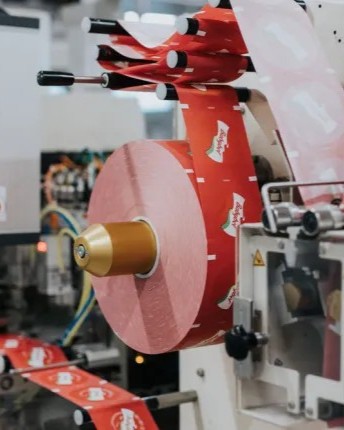
Replacing one packaging material with another involves careful consideration of performance at every stage, from production lines to supermarket shelves. The parent company, Bel Group, has had to rethink how the packaging protects the product, ensuring it continues to meet strict standards for food safety, freshness, and durability. Factors such as temperature changes, shelf life, and product integrity all need to be preserved.
More Than a Material Swap
This highlights a broader industry reality: sustainable packaging must work just as effectively as the materials it replaces.
Impact at Scale
With billions of portions sold globally each year, even incremental changes in packaging materials can deliver meaningful environmental benefits. Moving towards recyclable paper contributes to reducing reliance on less easily recyclable materials and supports systems already in place across many regions.
A Direction of Travel for Packaging
The rollout of the new packaging has already begun in the UK, with further expansion planned internationally over the coming years. More broadly, it mirrors a wider shift across industries. Consumers are increasingly looking for packaging that is clearly recyclable, made from renewable resources and compatible with existing waste systems.
Babybel is not alone in exploring paper-based solutions. Other major brands are making similar moves, reflecting a broader shift across the industry. Walkers has introduced paper multipack bags, while Mars has begun transitioning some of its chocolate bars to paper-based packaging. Meanwhile, Marks & Spencer continues to expand its use of paper packaging across its food ranges. Together, these changes highlight a growing momentum towards materials that are widely recyclable, familiar to consumers, and better suited to existing waste systems.