


 American Latina
 ANZ
 Austria
 Brazil
 Czech
 Finnish
 France
 Germany
 Italy
 North
America
 Norway
 Polish
 Portugal
 Spain
 Sweden
 United Kingdom
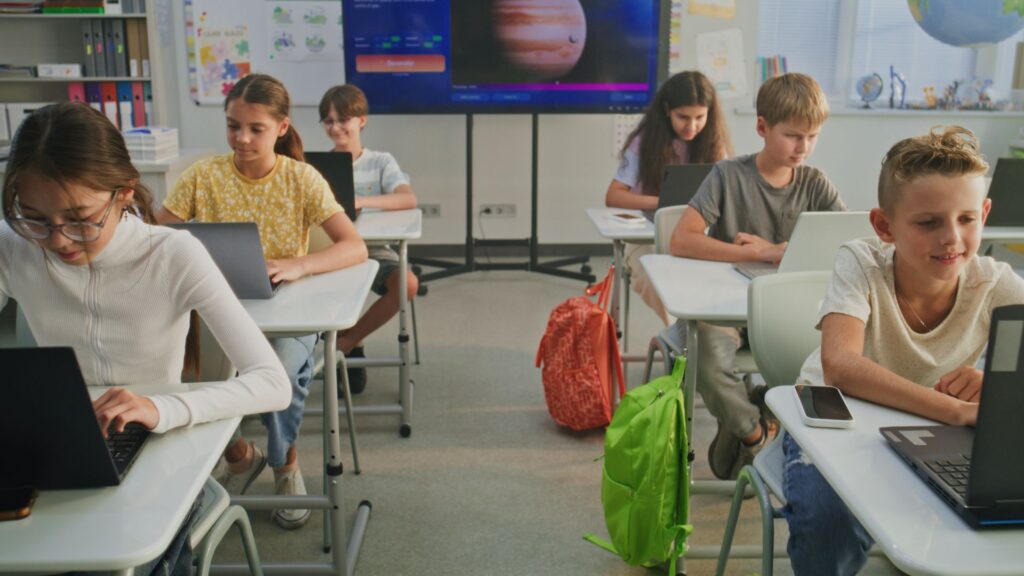
Clinicians are warning about the potential impact of classroom screen time. Could putting more paper back into lessons help children learn in a healthier balance?
Children are spending more of their school day on screens, from reading digital textbooks to completing worksheets on tablets. But with more than 150 clinicians calling for action on classroom screen time, questions are growing about whether our reliance on technology is coming at a cost.
In an open letter to the government, GPs, paediatricians and other specialists warned that excessive screen use could affect children’s physical and developmental health, including their eyesight. They called for a better understanding of the long-term impacts as the government develops screen-time guidance for children aged five to 18.
Why the screen-free classroom matters
Research suggests that prolonged near work, including screen use, is associated with short-sightedness, alongside factors such as reduced time outdoors. While screens alone cannot be blamed for rising rates, the findings highlight the importance of reviewing children’s screen habits and encouraging a healthier balance between screen-based activities and time away from devices.
The scale of the issue is striking. An analysis of 276 studies involving more than 5.4 million children and adolescents across 50 countries found that the prevalence of short-sightedness rose from 24.32% in 1990 to 35.81% in 2023, meaning it now affects around one in three young people worldwide. Researchers project that this figure could reach almost 40% by 2050.
Reducing continuous screen exposure is one way to encourage a more balanced school day. Regular breaks, time outdoors and a greater variety of classroom activities can all help limit the time children spend looking at screens at close range.
The benefits of putting pen to paper
Digital devices can support learning, but they shouldn’t be the default for every lesson. Printed books, worksheets and exercise books offer a simple way to reduce screen exposure while keeping children reading, writing and actively engaged.
There is evidence to support the value of print, too. A 2021 analysis of 39 studies involving 1,812 children found that children generally understood stories better when reading print books than equivalent digital versions.
Paper also gives children the opportunity to practise handwriting, annotate texts, draw diagrams and work through problems without navigating between apps or facing digital distractions.
A better balance
Schools could introduce more printed worksheets, physical books and screen-free writing activities throughout the day. At home, parents can do the same by encouraging reading, drawing and writing away from devices.
Children deserve the best of both worlds: technology when it helps, and paper when it offers a better way to read, write, think and learn.